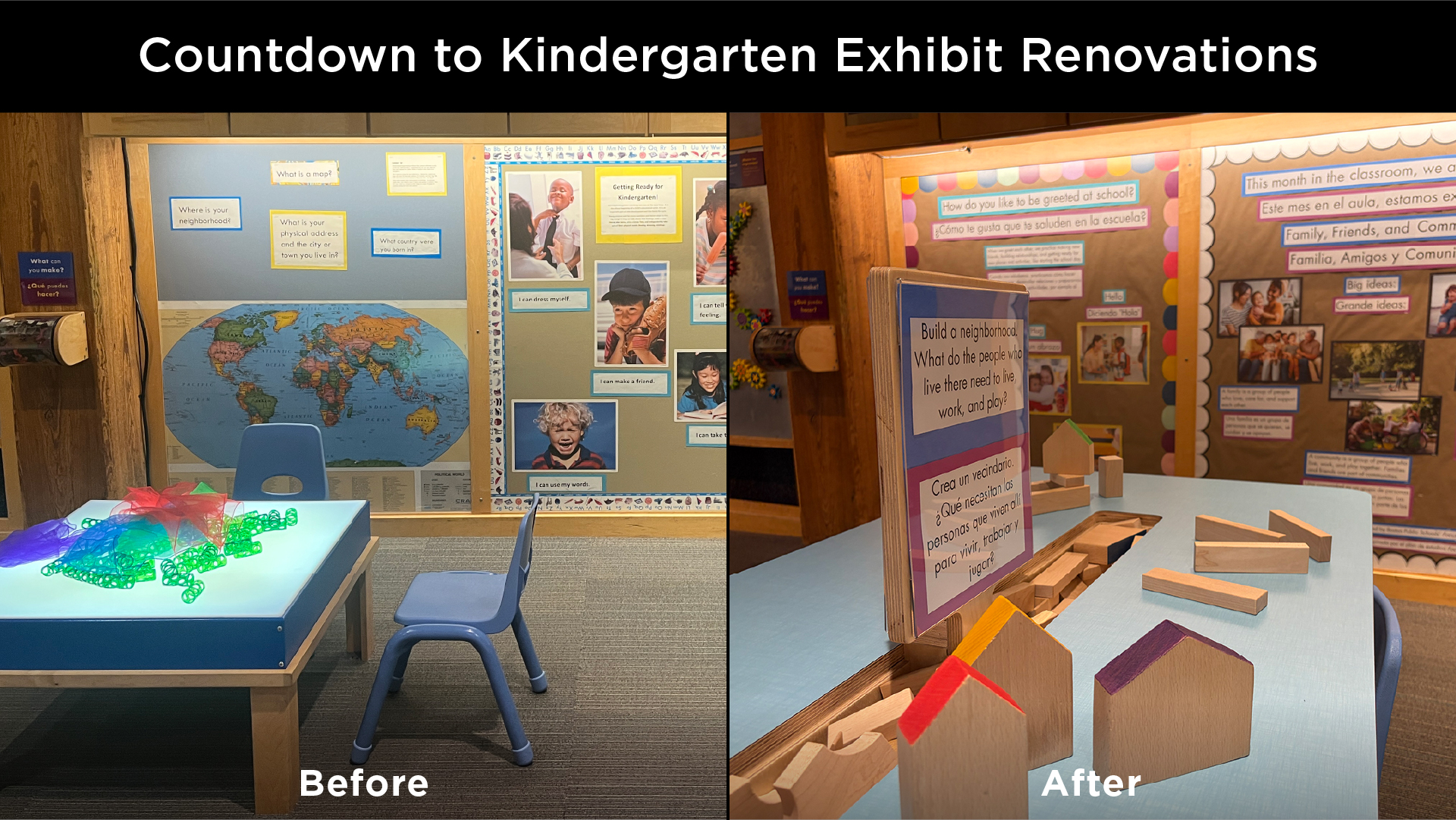
Some of the Museum’s permanent exhibits have been around for several decades. For the most part, a little love is all they need to continue giving visitors the best possible experience. But, as time passes, every exhibit needs updates to stay current; children’s lives are far different now than they were even just ten years ago. For that reason, the Museum’s exhibit design team has started to pick one permanent exhibit each year to refresh.
This year, the design team chose Countdown to Kindergarten, which was originally opened in 2010, but has a history at the Museum going all the way back to 1999. That year, the Museum partnered with the City of Boston to host the first Countdown to Kindergarten event, where children about to enter school for the first time got to participate in activities meant to help them celebrate their school readiness journey and the milestone of the first day of school. After years of successful annual celebrations, the Countdown to Kindergarten exhibit was unveiled to make getting children excited to start school a permanent part of the Museum’s landscape.
Countdown to Kindergarten was originally built to look and feel like a real Boston Public School classroom, and hosted staffed activities designed to help familiarize children and families with what they would experience at school, and celebrate that transition. From packing their backpacks, to sitting for storytime, to choosing a picture book to read on their own, Countdown helped children experience the fun of their first days of school before ever getting on the school bus.
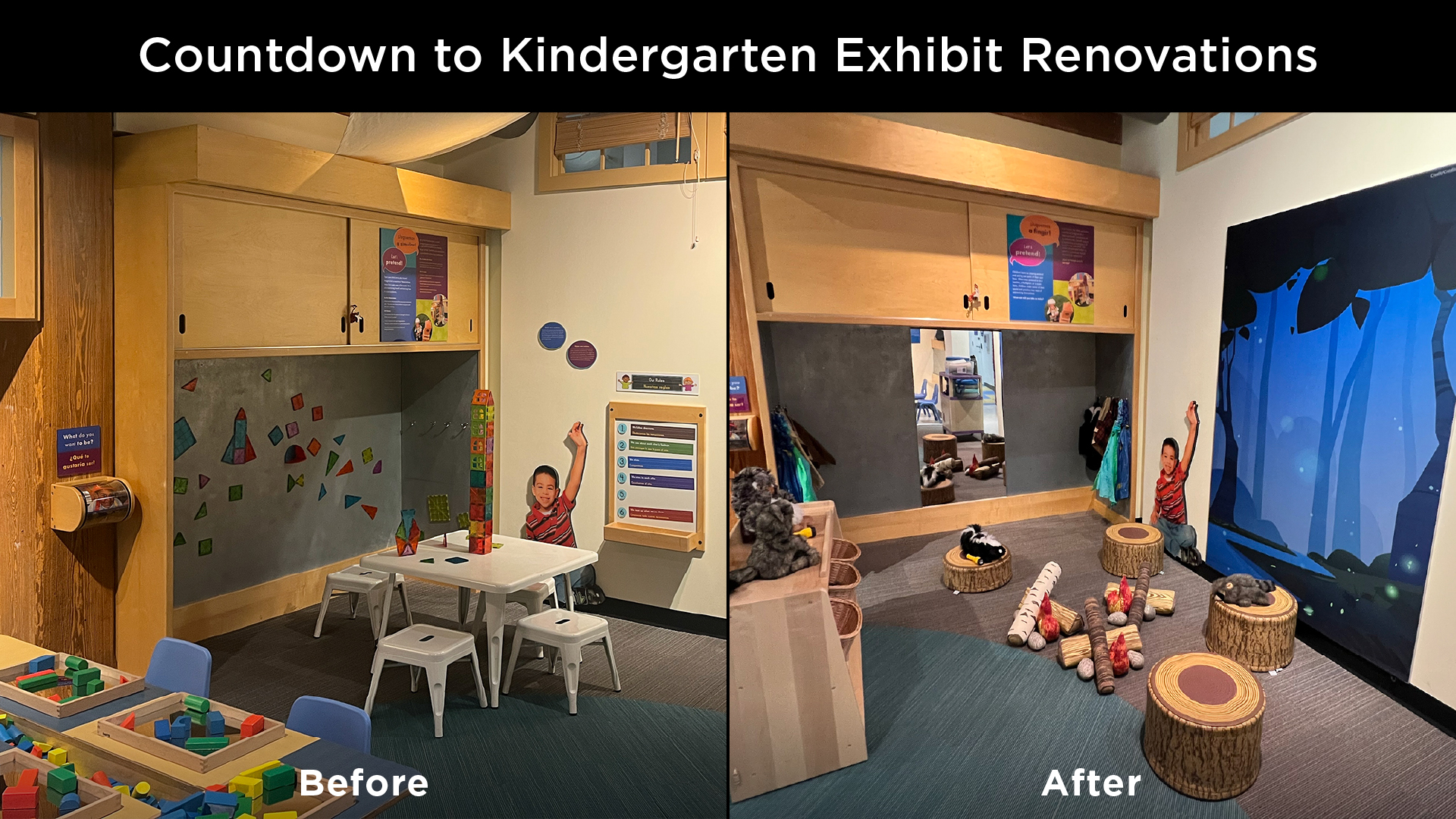
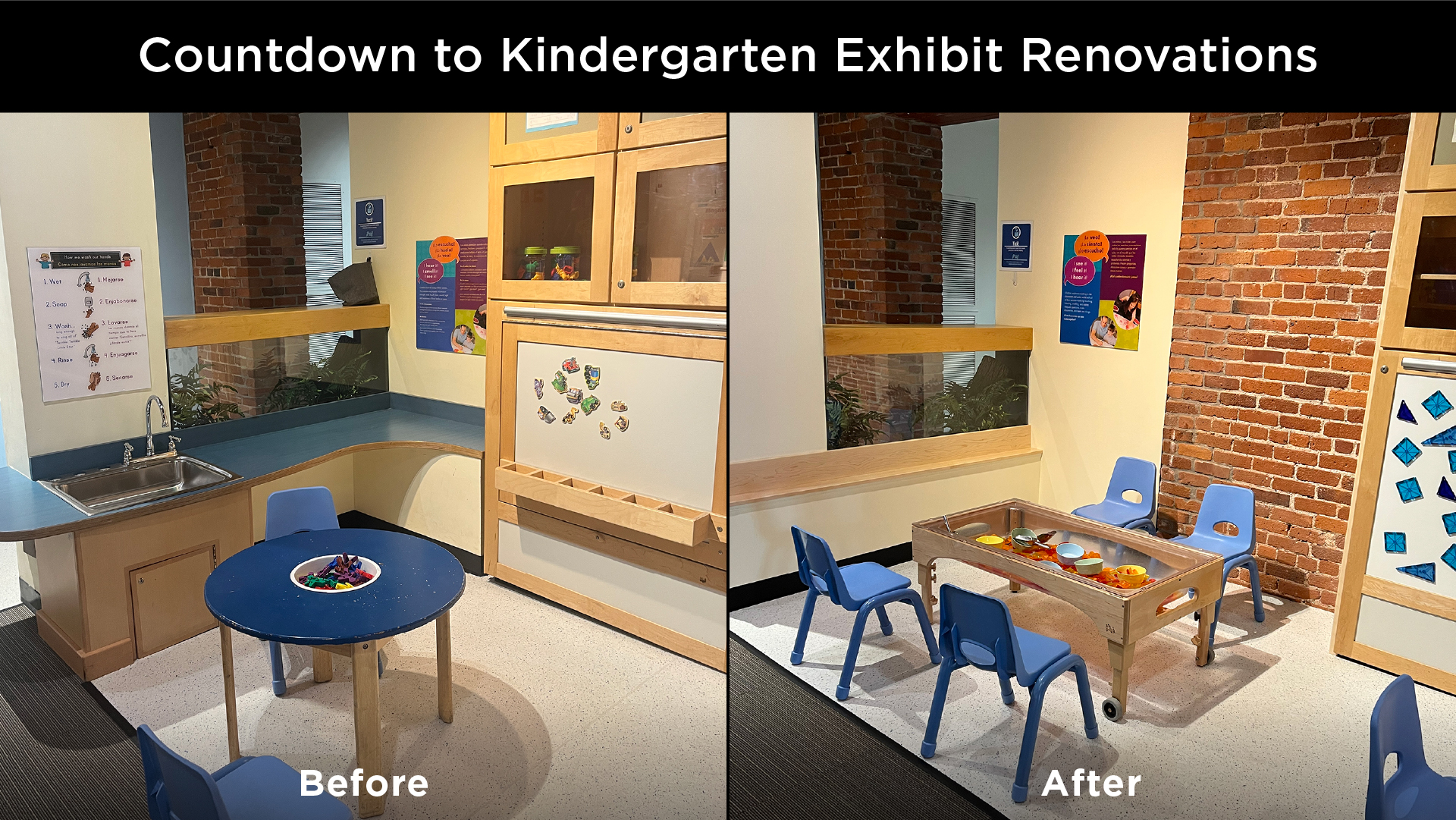
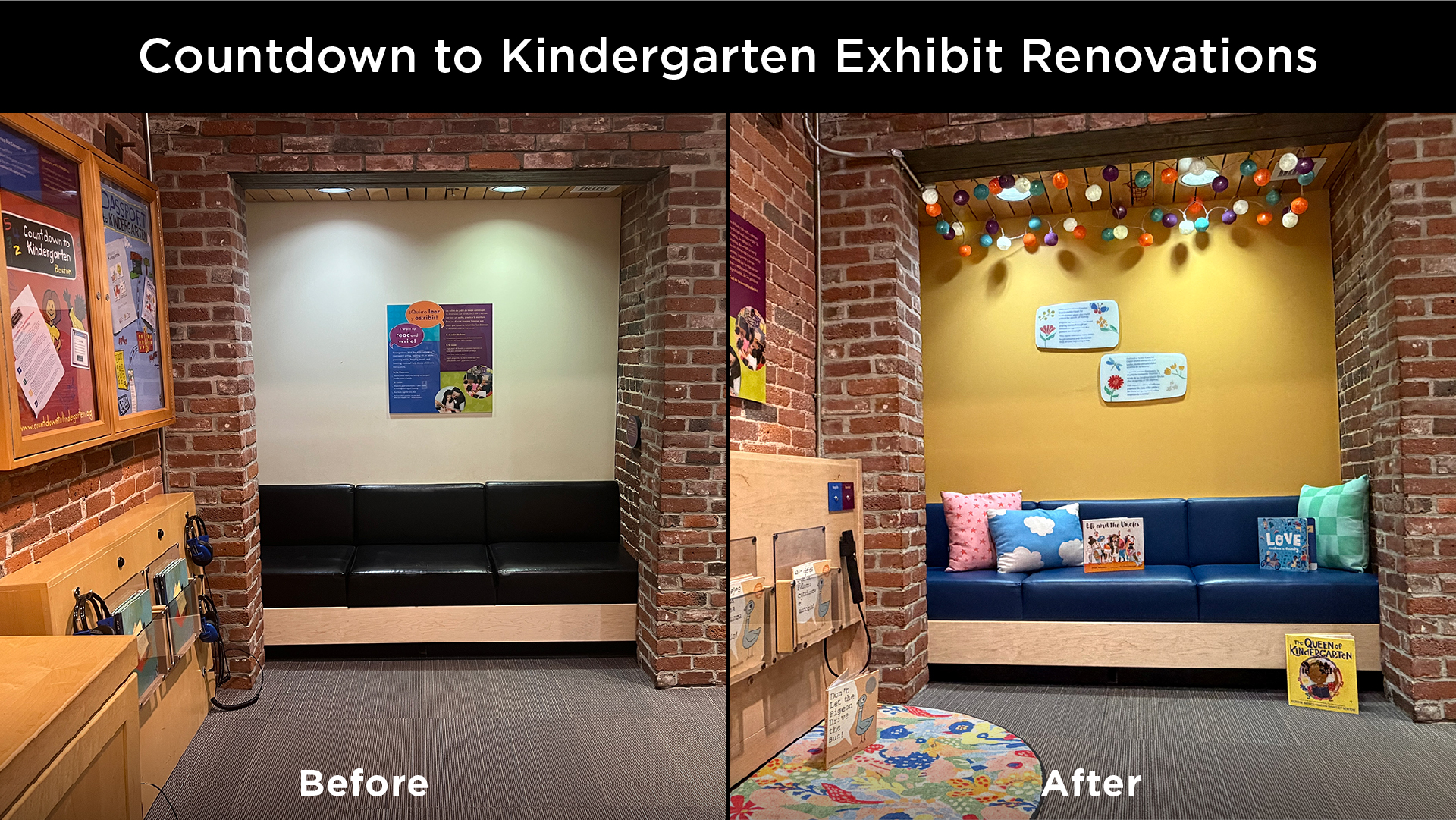
The big idea of the exhibit remains unchanged 16 years later, but the shape of real classrooms has changed, and so have the lives of children and families. The exhibits and programs teams wanted to update the space and the activities to make it more welcoming and relevant to children’s current experience of kindergarten.
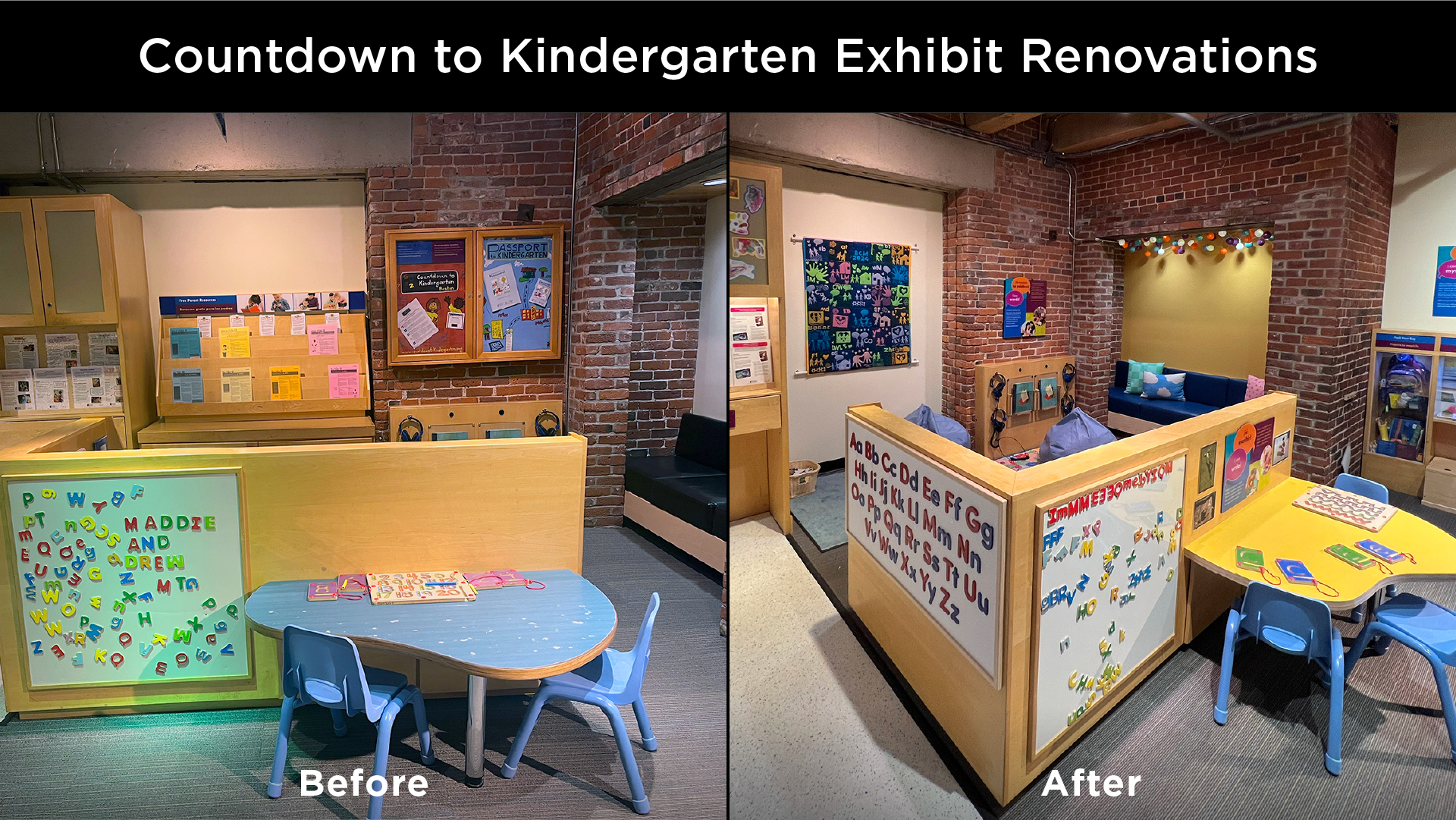
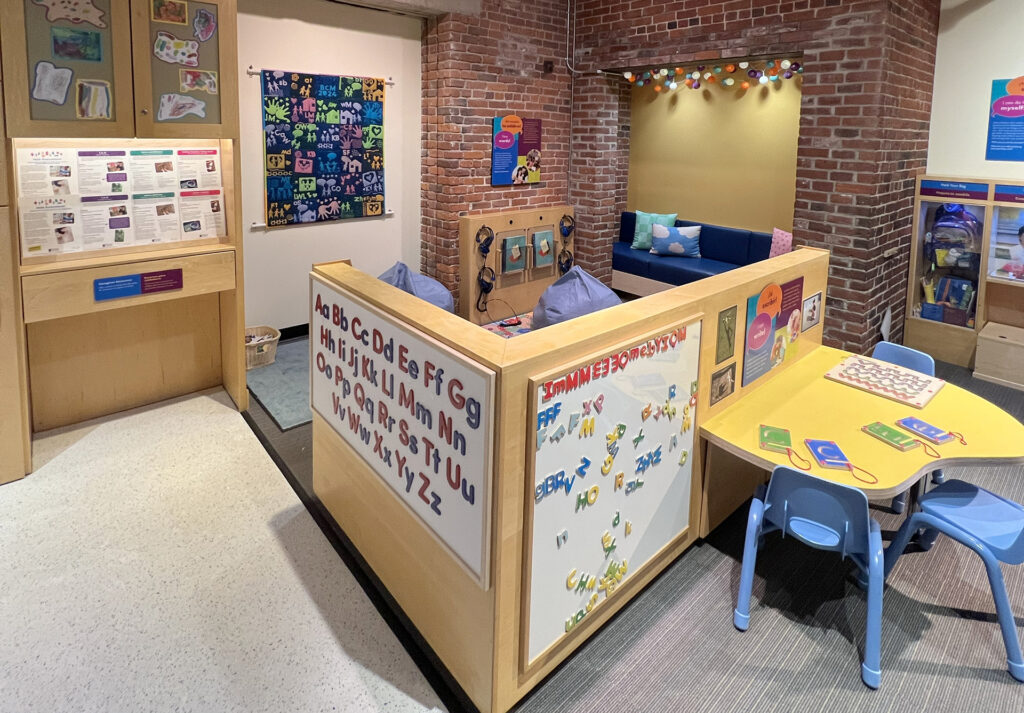
The dividing wall near the reading area was lowered, making it more inviting, while preserving quiet places to sit. The dramatic play area was enhanced with fun backdrops that change along with the classroom theme and encourage children to create their own scenes. Programs in the space are offered regularly, giving children and caregivers an opportunity to participate in circle times and other skill-building activities with a Museum educator. The team is also refreshing the exhibit theme every two months, reflecting and reinforcing what is actually happening in Boston classrooms.
Other improvements to exhibits around the Museum include:
- Bringing back our seasonal experience, Curiosity Kitchen, for a third year to welcome both Museum visitors and those passing by on the Harborwalk. This popular outdoor pop-up exhibit lets children and caregivers get their hands messy by playing and experimenting with real natural materials like sand, water, pine cones, and more.
- Infant nooks were updated or added to many exhibits throughout the Museum. These nooks provide infants and young toddlers with developmentally meaningful experience connected to their host exhibits, letting even the youngest visitors and their caregivers get the full, fun experience.
Looking ahead to the coming year, we have several projects of different scales in the works. Guided by our Empathy at the Heart initiative, which is focused on fostering empathy development in young children, in October we will be welcoming the exhibit Oceans of Empathy to our Gallery. There, children and caregivers will get to practice connection and care through the exploration of artwork and related activities that build an awareness of the ocean and the animals within it. This Fall we will be welcoming our new visiting exhibit, The Pigeon Comes to Boston! A Mo Willems Exhibit. We’re also working on accessibility improvements and content updates for the Japanese House exhibit.
Lastly, the Museum will soon launch Story Boxes, curated with and by members of the community. These mobile displays will feature items from the Museum’s Collection, and will travel to 12 different sites through 2029, allowing us to connect with new audiences that may not yet be part of the Museum community.